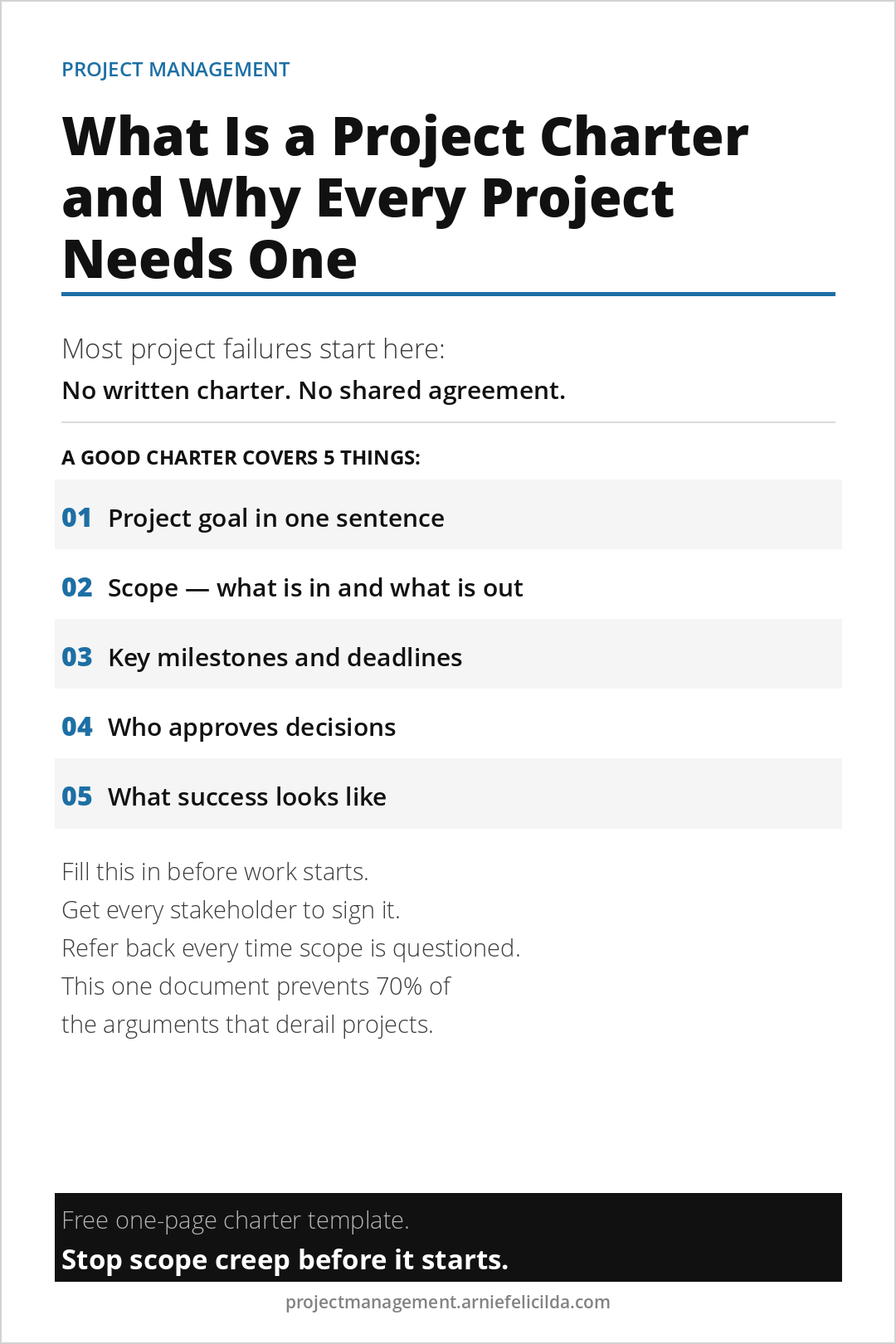
A project charter is a one-page written document that defines what a project is, what it will deliver, who approves decisions, and what success looks like before any work begins. It is the single most effective tool for preventing the arguments, scope disputes, and missed deadlines that derail most projects. And it takes about 20 minutes to write.
Most project failures happen because no one wrote a charter. Everyone assumed they understood the project the same way. They did not.
What a Project Charter Includes
1. Project Goal in One Sentence
Write what the project will deliver in a single sentence. Not a paragraph. Not a list. One sentence. If you cannot write the goal in one sentence, the project is not clearly defined yet. Do not start work until you can. A goal written in one clear sentence prevents the goal-shifting that happens when different stakeholders have different interpretations of what success means.
2. Scope: What Is In and What Is Explicitly Out
List the deliverables that are in scope. Then list what is explicitly out of scope. The out of scope section is the most important part of a charter and the most commonly skipped. When you do not define what is out of scope, everything is potentially in scope. That is where scope creep starts. Read more about managing scope in What Is Scope Creep and How to Stop It.
3. Key Milestones and Dates
List the five to eight most important milestones in the project with their target dates. Not every task. Not a full project schedule. The key checkpoints where something significant is delivered, reviewed, or approved. These milestones become your weekly tracking reference. Track them using the free Weekly Progress Dashboard so you always know which milestones are on track and which are falling behind.
4. Decision Authority
Name who has the final authority to approve decisions when the team is divided or when a significant change is requested. This is typically the project sponsor. The charter names this person explicitly so there is no ambiguity when a decision needs to be made quickly. Unclear decision authority is one of the top three causes of project delays.
5. Definition of Success
Define what success looks like in measurable terms. Not the project is done. Not stakeholders are happy. A specific, measurable outcome that can be verified at the end of the project. This prevents the goalpost-moving that happens when success is defined vaguely and stakeholders redefine it as the project progresses.
The rule that matters: Every person who will work on the project or approve its deliverables needs to read the charter and confirm they agree with it before work starts. A charter that was not reviewed by all key stakeholders is not a charter. It is a document that will be ignored the first time there is a disagreement.
How to Write a Project Charter in 20 Minutes
Open the free Project Charter Workbook. It walks you through each of the five sections with prompts that make the writing faster and the output more useful. Write each section in plain language. Do not try to make it perfect. Make it clear and specific. A rough charter that all stakeholders have read and agreed on is worth more than a polished charter that no one has looked at since kickoff.
After writing the first draft, send it to your sponsor and key stakeholders. Ask one question: Does this accurately describe what we are building and what we are not building? Their response will surface the disagreements before work begins rather than three weeks into the project when they are expensive to resolve.
How to Use the Charter Once the Project Starts
Reference the charter every week. When a stakeholder requests a change, open the charter and check whether the request is in scope. If it is not, it goes through the formal change request process. Use the free Scope Creep Risk Checker to score your project against the most common scope vulnerabilities before and during the project. If a risk is flagged, the charter is the first document you go back to.
If you want the complete project management system that uses the charter as its foundation, The Accidental Project Manager includes the charter workbook, the daily sprint system, and the scope lock framework in one place. It is built for people who run projects without formal training.
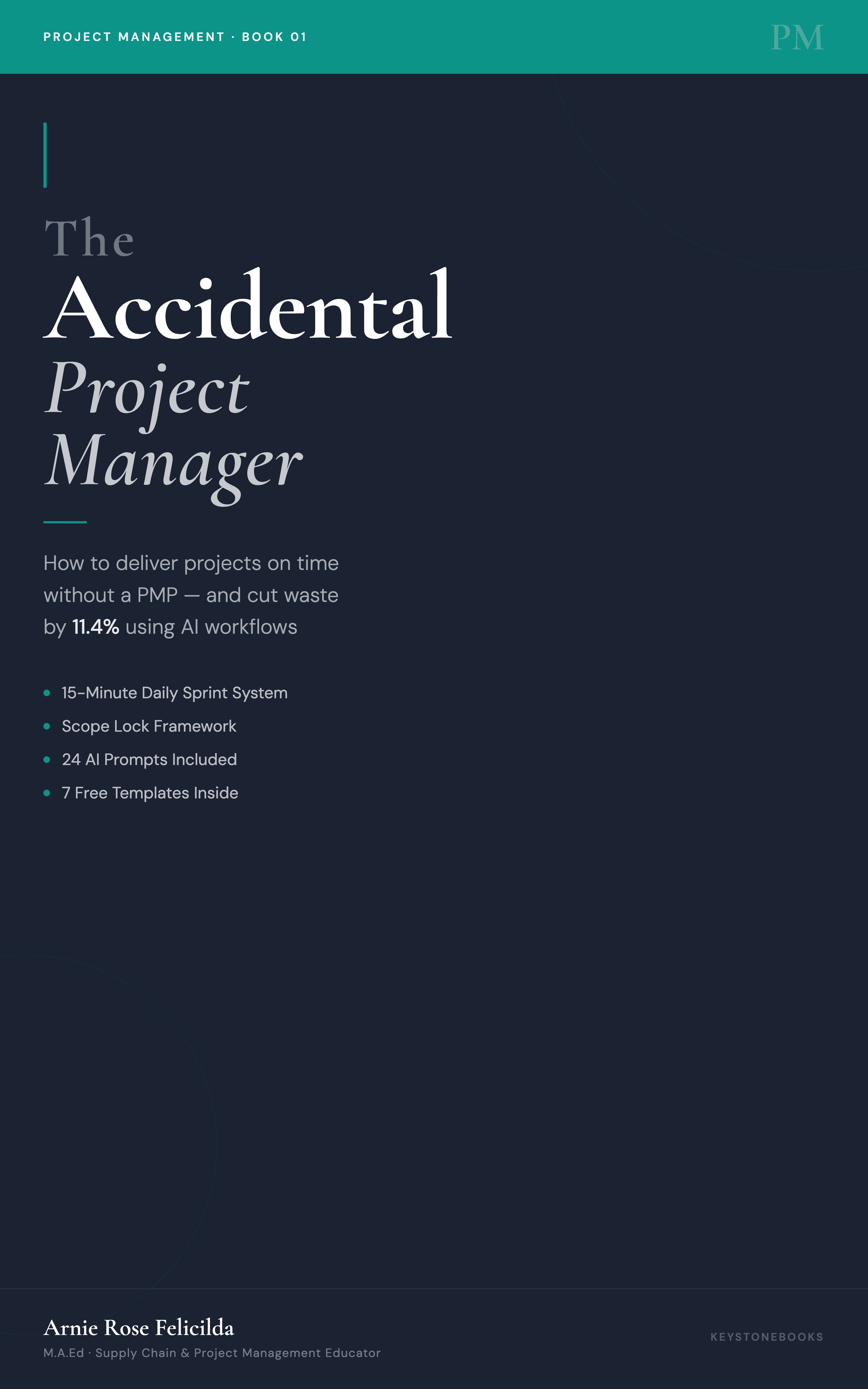
Book 01. Available Now
The Accidental Project Manager
How to deliver projects on time without a PMP and cut waste by 11.4% using AI workflows. 15-Minute Daily Sprint System, Scope Lock Framework, and 24 AI Prompts included.
Get the BookMore Project Management Reads
- How to Stop Scope Creep Before It Derails Your Project
- How to Manage Projects Without a PMP
- How Operations Managers Can Actually Use AI on Projects
- The Difference Between a Busy Project and a Healthy One
- How to Recover a Project That Is Off the Rails
Free Project Management Tools
Get free tools built for people who run projects without formal training.
Charter template, sprint system, dashboard, recovery checklist, and AI prompt library. All free. Delivered instantly.