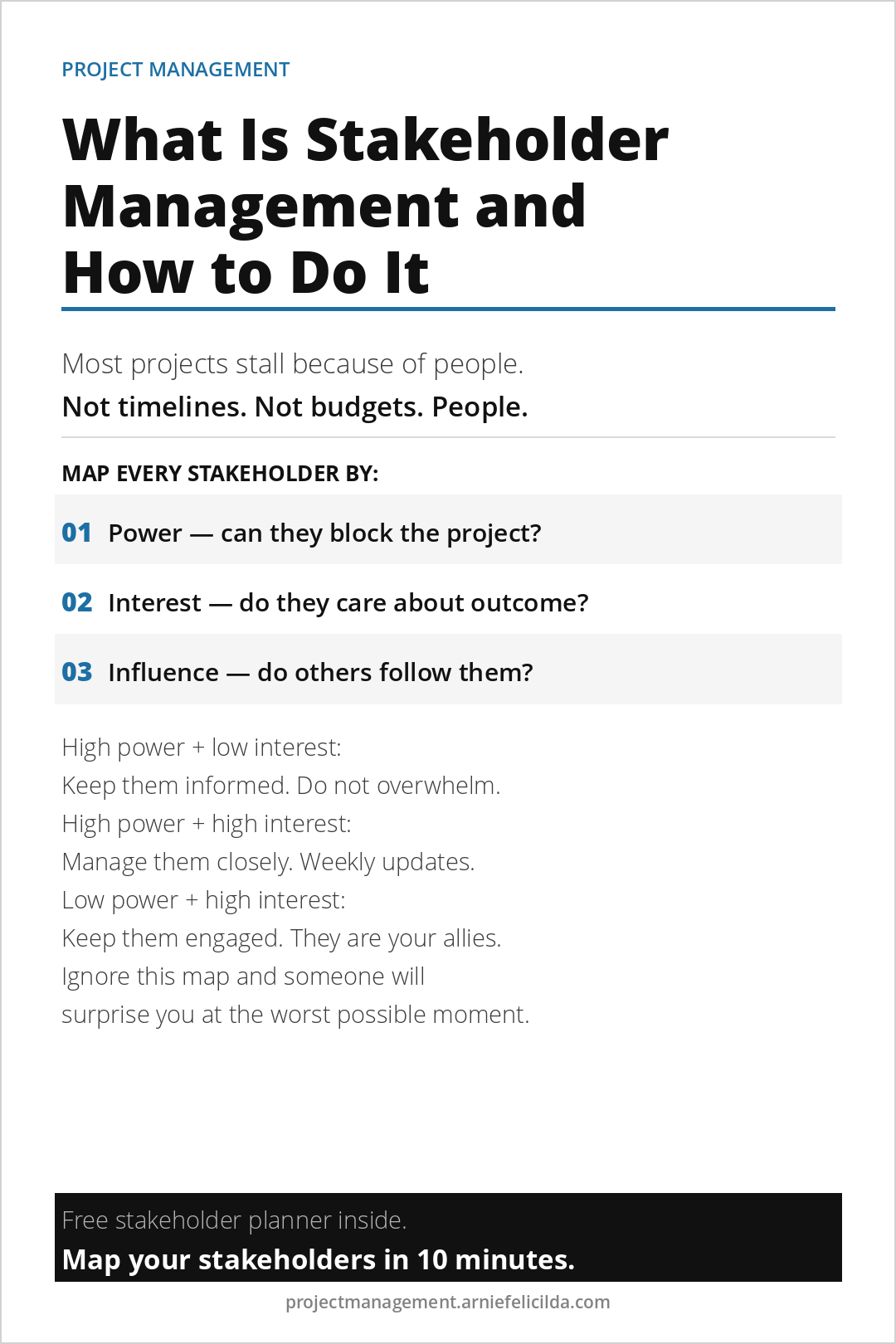
Stakeholder management is the practice of identifying the people who are affected by or can affect your project, understanding what they need from it, and communicating with them in a way that keeps the project moving forward. It is not about making everyone happy. It is about making sure the right people have the right information at the right time so that no one can derail the project by surprise.
Most projects stall because of people, not processes. A sponsor who feels out of the loop becomes a micromanager. A stakeholder whose concerns were never addressed becomes a blocker at the approval stage. A team member who does not understand their role misses a critical handoff. All of these are stakeholder management failures.
How to Map Your Stakeholders
Before any project starts, identify every person who has a stake in its outcome. Then map them on two dimensions: power and interest. Power is the ability to affect the project positively or negatively. Interest is how much they care about what the project delivers. Use the free Stakeholder Communication Planner to map up to six stakeholders by power and interest and generate a tailored communication plan for each one in under 10 minutes.
The Four Stakeholder Categories
- High power, high interest: Manage closely. Weekly updates, direct involvement in key decisions, early warning on any issues.
- High power, low interest: Keep informed. Brief updates at key milestones. Do not overwhelm them with detail they do not need.
- Low power, high interest: Keep engaged. Regular communication keeps them aligned. These are often your most vocal supporters or critics.
- Low power, low interest: Monitor. Minimal communication required. Update them at project completion.
The most common mistake is treating all stakeholders the same. Sending the same weekly update to your project sponsor and to a peripheral team member wastes the sponsor time and underwhelms the team member who needs more context. Differentiate your communication by category.
What to Communicate and How Often
For high power, high interest stakeholders: a weekly one-paragraph update covering the three health numbers, any decisions needed from them this week, and any emerging risks. Track those numbers using the free Weekly Progress Dashboard so you always have a clear status to share. Keep it short. Make it easy to respond to. If they need to make a decision, ask the question directly.
For high power, low interest stakeholders: milestone updates only. When a significant deliverable is completed, when a change to the timeline is confirmed, and when the project closes. Not weekly status reports they will not read.
For low power, high interest stakeholders: regular but brief updates. A short email at key stages, an invitation to relevant review meetings, and a response to their questions within 24 hours. These stakeholders become advocates when they feel informed. They become critics when they feel ignored.
How to Handle a Difficult Stakeholder
A difficult stakeholder is almost always a stakeholder who feels their concerns have not been heard. The management approach is not avoidance. It is a direct, private conversation early in the project: I want to make sure I understand what a successful outcome looks like from your perspective. What matters most to you in this project?
That question surfaces concerns early enough to address them. Most stakeholder conflicts that derail projects in the final weeks could have been resolved with a 20-minute conversation in the first week.
If you want the complete stakeholder management system including the communication framework and the charter that aligns everyone before work starts, The Accidental Project Manager covers all of it in one place. It is built for people running projects without formal training who need a system that works from day one.
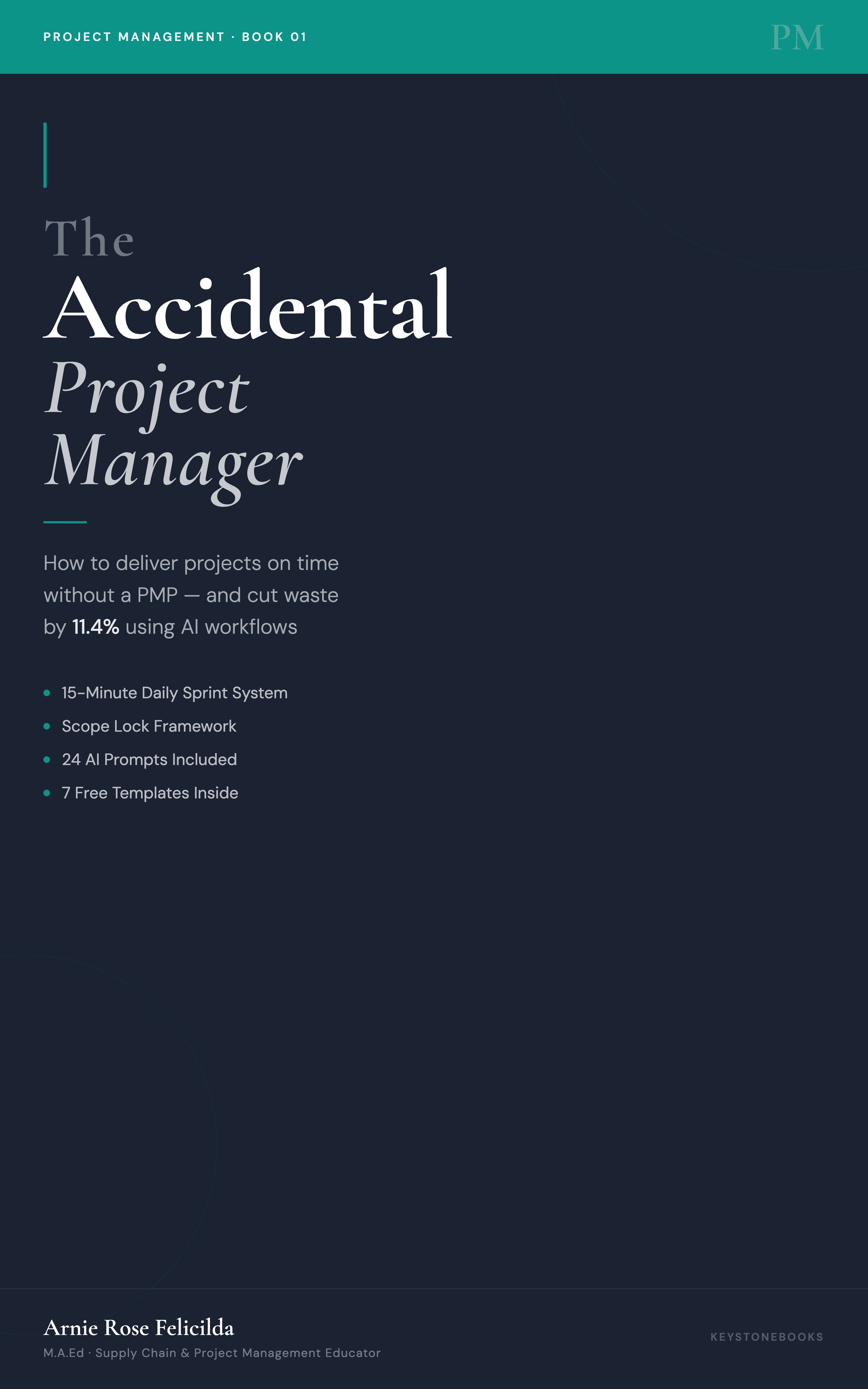
Book 01. Available Now
The Accidental Project Manager
How to deliver projects on time without a PMP and cut waste by 11.4% using AI workflows. 15-Minute Daily Sprint System, Scope Lock Framework, and 24 AI Prompts included.
Get the BookMore Project Management Reads
- How to Stop Scope Creep Before It Derails Your Project
- How to Manage Projects Without a PMP
- How Operations Managers Can Actually Use AI on Projects
- The Difference Between a Busy Project and a Healthy One
- How to Recover a Project That Is Off the Rails
Free Project Management Tools
Get free tools built for people who run projects without formal training.
Charter template, sprint system, dashboard, recovery checklist, and AI prompt library. All free. Delivered instantly.