Resource-constrained projects are not exceptional. They are the normal condition for most projects in most organizations. The project manager who can only work under ideal conditions is not useful. The one who can deliver results with what is available is the one who gets given more responsibility over time.
The First Thing to Establish
Before you start planning with constrained resources, you need to establish what is actually required versus what would be nice to have. These two categories are not the same, and confusing them leads to either asking for resources you do not genuinely need or accepting resource constraints that will prevent completion.
A project with reduced scope delivered on time is more valuable than a full-scope project that is perpetually delayed waiting for resources that never arrive.
5 Principles for Resource-Light Projects
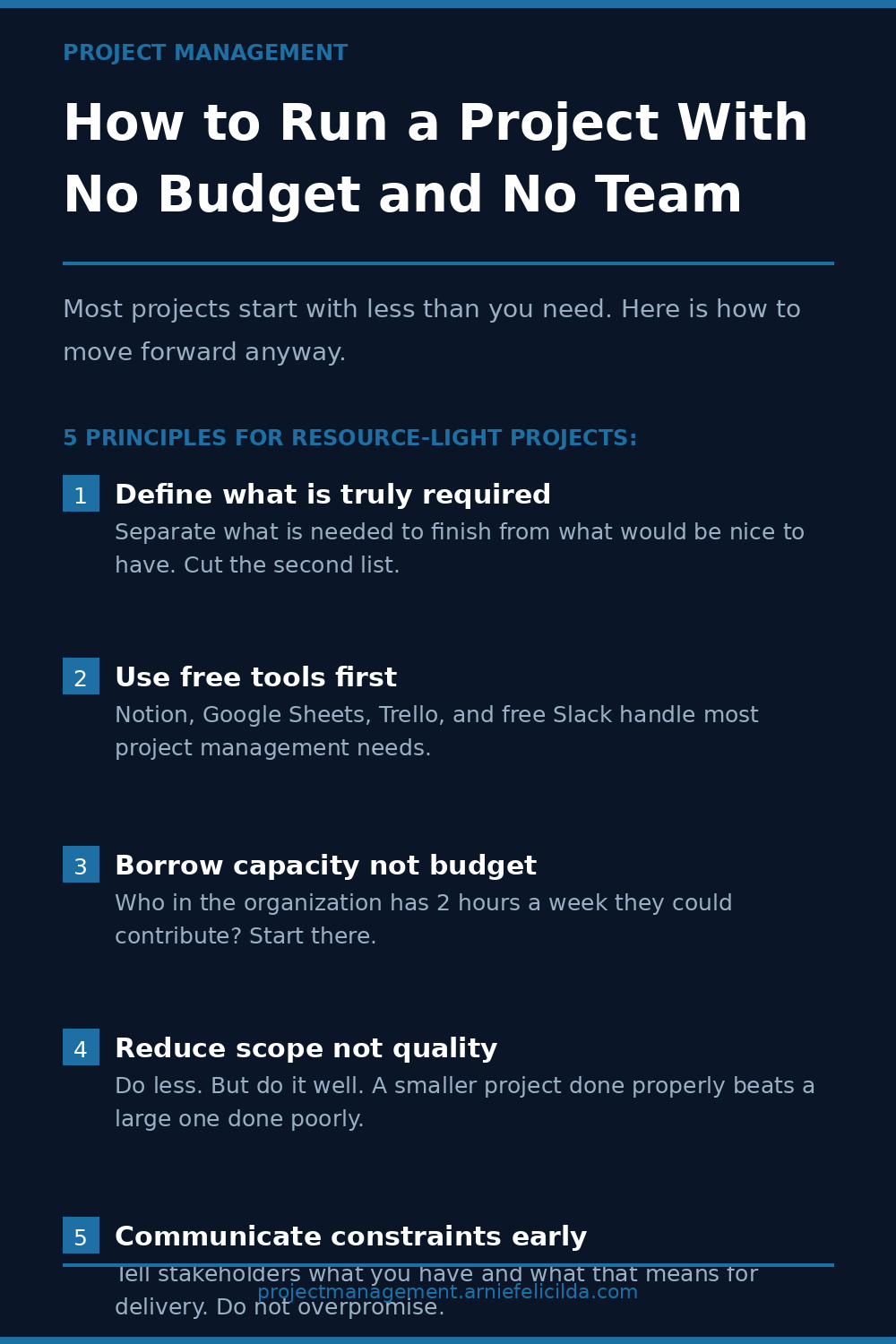
Define What Is Truly Required
Write two lists. What must be done for this project to achieve its core goal. What would be done if resources were unlimited. Then cut everything from the second list. A smaller, clearly defined project is more likely to succeed than a large, ambitious project that lacks the resources to execute.
Use Free Tools First
Notion, Google Sheets, Trello free tier, and free Slack handle the project management needs of most small to medium projects. Before requesting budget for project management software, verify that the free alternatives genuinely cannot do what is needed. Most of the time, they can.
Borrow Capacity Instead of Budget
Who in the organization has two to four hours per week that could be allocated to this project? A developer who is between assignments. A designer with capacity. A subject matter expert whose input is only needed for two weeks. Borrowed capacity costs less than contractors and is often available when direct budget is not.
Reduce Scope, Not Quality
Doing fewer things well is better than doing more things poorly. When resources are constrained, the right response is to reduce the list of deliverables, not to spread thin resources across the full original scope and produce mediocre results across all of it.
Communicate Constraints Early and Explicitly
Tell stakeholders what you have to work with and what that means for what the project can deliver. Do not make assumptions about what they will accept. Show them the options and let them make the call on scope, timeline, or resources. Surprises late in a project are always more damaging than uncomfortable conversations early.
When to Push Back on the Constraints
If the resource constraint genuinely makes the project impossible to complete with acceptable quality, that needs to be stated clearly and early. Not as a refusal to proceed, but as a risk that the project sponsor needs to own. Document it. Get it acknowledged in writing. Then proceed with the best plan available given the constraints.
For more on this topic, read How to Write a Project Plan From Scratch. You may also find How to Say No to a Stakeholder useful as a next step.
Available Now
The Accidental Project Manager
For the person who was handed a project and told to figure it out. The 15-minute daily system, scope lock framework, and AI prompts that get any project back on track. No certification required.
Get the Book on Gumroad