Most project managers struggle with stakeholder requests not because they cannot identify which ones to decline, but because they do not have a way to decline them that feels professional and complete. The request lands. The manager knows it will damage the timeline. They say yes anyway because they do not know what else to say.
Why Saying Yes Is Not the Safe Option
Agreeing to a request you know will damage the project feels like the path of least resistance. It avoids immediate conflict. But it creates a larger conflict later - a missed deadline, an overrun budget, a scope that grew until the original goal became unachievable.
Every yes that compromises the project is a debt you will have to explain later. The conversation is not if you will have it. It is whether you have it now, when you can do something about it, or later, when you cannot.
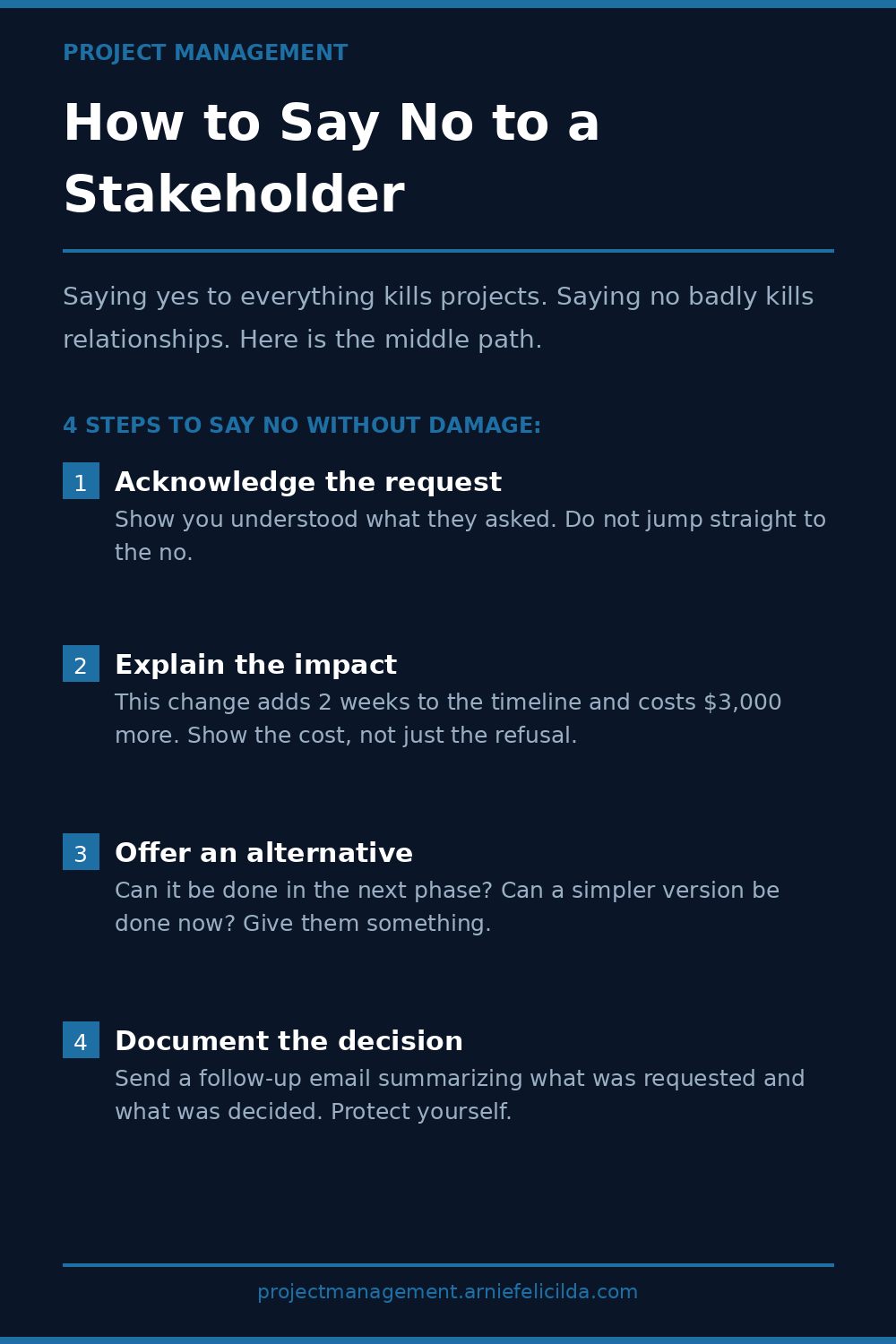
4 Steps to Say No Without Damage
Acknowledge the Request First
Show that you understood what was asked before you respond to it. I understand you need X by Friday is different from just saying no. The acknowledgment tells the stakeholder they were heard, which changes the emotional tone of what follows.
Show the Impact Specifically
This change adds two weeks to the delivery date and requires reallocating the developer who is currently finishing the testing phase. Specific impacts are more persuasive than general ones. The stakeholder can evaluate a concrete trade-off. They cannot evaluate a general concern.
Offer an Alternative
Can this be included in the next phase? Is there a simpler version that achieves the core need without the timeline impact? Can it be done in parallel with a different resource? An alternative demonstrates that you are trying to help, not just blocking the request.
Document the Decision in Writing
After the conversation, send a brief email summarizing what was requested, what was decided, and the reason. This protects you if the stakeholder later claims the decision was different. It also creates a record that, if the project is ever questioned, shows the decisions that shaped it.
When the Stakeholder Still Pushes
If a stakeholder continues to push after you have shown the impact and offered an alternative, escalate the decision to the project sponsor. Your role is to provide the information needed to make the decision. The sponsor's role is to make the call on whether to accept the impact or decline the request. Do not hold that decision yourself when the stakeholder has authority over the outcome.
For more on this topic, read How to Get Stakeholder Buy-In Before the Project Starts. You may also find What Is Change Management in a Project? useful as a next step.
Available Now
The Accidental Project Manager
For the person who was handed a project and told to figure it out. The 15-minute daily system, scope lock framework, and AI prompts that get any project back on track. No certification required.
Get the Book on Gumroad