Most project managers spend the bulk of their pre-project time on planning documents. Scope, timeline, budget. Those are important. But a well-planned project that lacks stakeholder support will hit obstacles that no plan can prevent - delayed approvals, withheld resources, competing priorities.
What Stakeholder Buy-In Actually Means
Buy-in does not mean everyone is enthusiastic about the project. It means the people who can affect the project understand what it is trying to achieve, have had their concerns addressed, and are not actively working against it. Enthusiastic support is a bonus. Active opposition is the risk you are managing.
The goal of stakeholder engagement is not to sell the project. It is to understand what each stakeholder needs the project to accomplish - and to show them how it does that, or to honestly acknowledge where it does not.
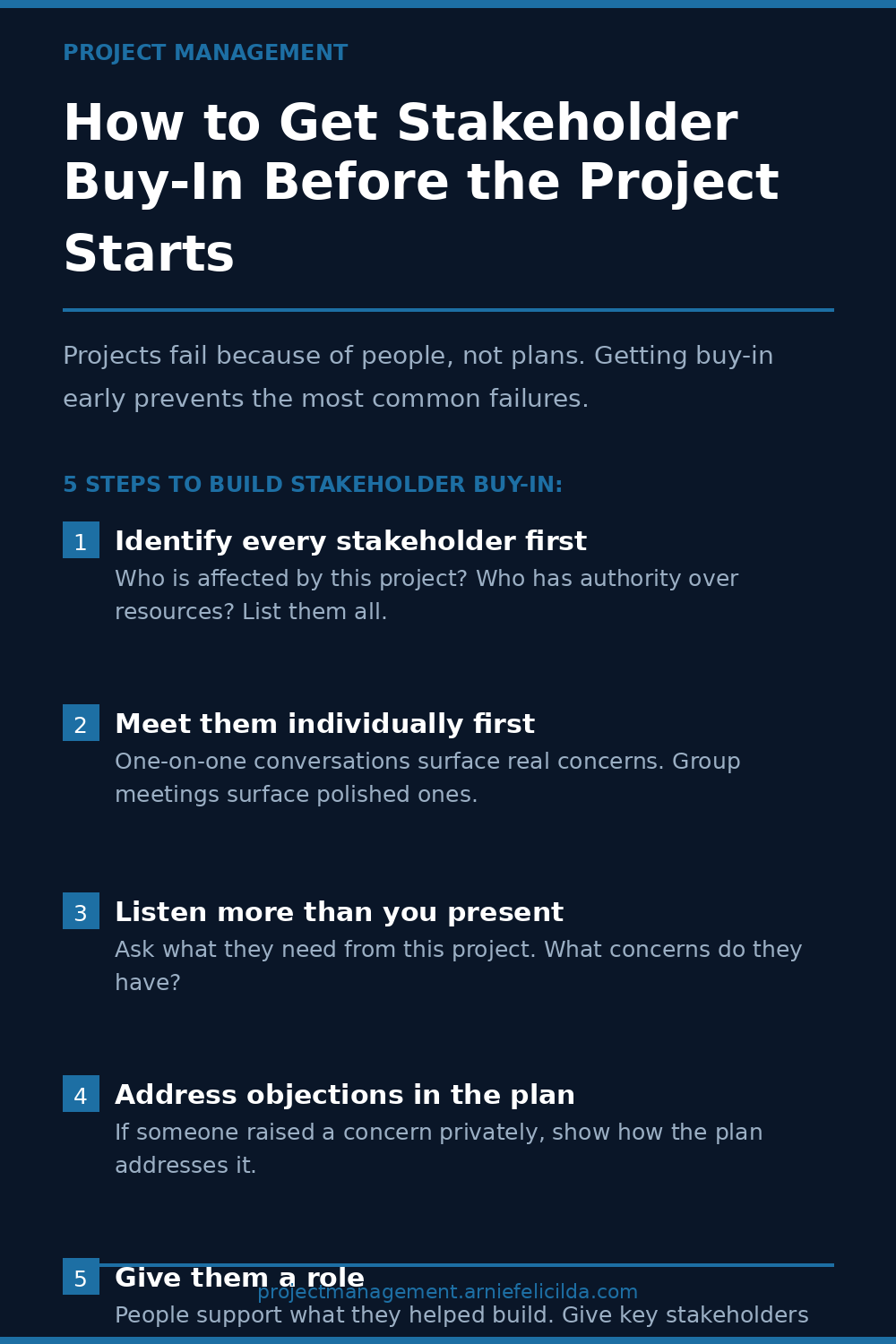
5 Steps to Build Stakeholder Buy-In
Identify Every Stakeholder First
Who is affected by this project's outcomes? Who controls resources the project depends on? Who has the authority to stop or significantly change the project? Who will need to use or maintain the output after the project ends? List all of them before you start any engagement.
Meet With Them Individually Before the Group
One-on-one conversations surface real concerns. Group meetings surface polished ones. In a group setting, stakeholders often align with the perceived majority position rather than expressing their actual concerns. Individual conversations give you the real picture.
Ask More Than You Present
In each individual conversation, spend more time asking than presenting. What does this stakeholder need the project to achieve? What would make it a success from their perspective? What concerns do they have? What would prevent them from supporting it? Their answers should shape the plan, not confirm it.
Address Objections Explicitly in the Plan
If a stakeholder raised a specific concern in an individual conversation, show in the project plan how that concern is addressed. They will notice. A plan that shows it was written with their input builds more confidence than one that appears to have been written without it.
Give Key Stakeholders a Meaningful Role
People support what they helped build. Identify two or three key stakeholders and give them a genuine role in shaping the project - reviewing the scope, validating the approach, or representing a specific function in planning decisions. The time this costs in the planning phase returns in cooperation during execution.
What to Do When a Stakeholder Will Not Engage
A stakeholder who refuses to participate in pre-project engagement is not a neutral party. They are a risk. Document your attempts to engage them. Escalate to the project sponsor if the disengaged stakeholder has authority that could affect project delivery. A stakeholder whose concerns were never heard has no obligation to support the project and every reason to surface their objections at the worst possible moment.
For more on this topic, read What Is a RACI Chart and When to Use One. You may also find How to Say No to a Stakeholder useful as a next step.
Available Now
The Accidental Project Manager
For the person who was handed a project and told to figure it out. The 15-minute daily system, scope lock framework, and AI prompts that get any project back on track. No certification required.
Get the Book on Gumroad