The lessons learned meeting is the most frequently promised and least frequently delivered project management activity. Teams agree it is valuable. Then the project ends, everyone moves on, and the session never happens.
The reason it does not happen is that it is positioned as a bonus activity rather than a required close step. Move it into the project close checklist, give it a fixed timebox, and it happens consistently.
When to Run the Meeting
Within one week of project close, while the experience is still fresh. After two weeks, people have moved on mentally. After a month, the details that matter are gone. The window for a useful lessons learned session is narrow.
A lessons learned session that happens two months after project close is an archaeology exercise. A session that happens within a week is a useful debrief. The timing matters as much as the format.
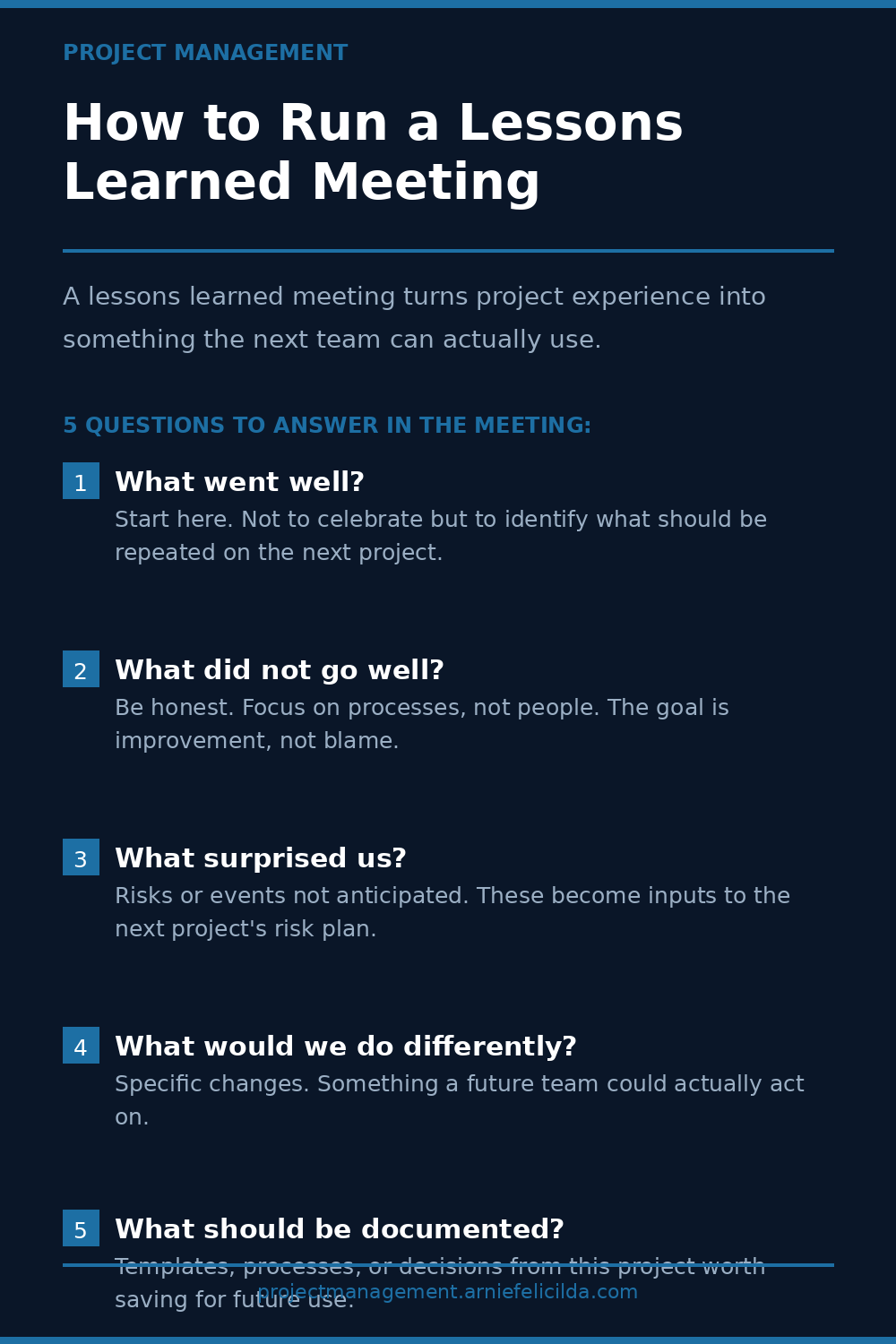
5 Questions to Answer in the Meeting
What Went Well?
Start here deliberately. Not to celebrate, but to identify what should be repeated on the next project. A process that worked, a tool that was effective, a decision that was made quickly and turned out to be correct. These are as important as the failures.
What Did Not Go Well?
The honest version of this question, not the diplomatic one. Not there were some communication challenges. What specific things went wrong, and what was the cause? Focus on processes and decisions, not on individuals. The goal is system improvement, not performance evaluation.
What Surprised the Team?
Risks or situations that were not anticipated in the planning phase. These are particularly valuable because they are the inputs to the next project's risk plan. What happened on this project that we did not expect, and how would we plan for it if we knew it was coming?
What Would We Do Differently?
Specific, actionable changes. Not we would communicate better - we would send a written summary after every decision made on a call. The specificity is what makes a lesson usable by the next team.
What Should Be Documented for Future Projects?
Templates that were created for this project and should be reused. Decisions that established precedent. Vendor relationships that should be maintained. Knowledge that currently exists only in people's heads and should exist somewhere findable.
What to Do With the Output
Write a one-page summary of the key lessons and store it somewhere accessible - a shared drive folder, a project management tool, or an internal wiki. Then reference it explicitly at the start of the next similar project. A lessons learned document that is never consulted is complete but not useful.
For more on this topic, read How to Close a Project Properly. You may also find How to Write a Project Status Report in 10 Minutes useful as a next step.
Available Now
The Accidental Project Manager
For the person who was handed a project and told to figure it out. The 15-minute daily system, scope lock framework, and AI prompts that get any project back on track. No certification required.
Get the Book on Gumroad