Project close is the most commonly skipped phase of project management. When the deliverables are done, the team is already mentally on the next thing. The close feels like administrative overhead on top of work that is already finished.
The cost of skipping it shows up later. In the contract that was never formally completed. In the team member who is still allocating time to a finished project. In the lesson that was never captured and gets repeated on the next project.
What Project Close Actually Accomplishes
A proper project close does three things. It confirms the work is actually done and accepted. It creates a clean record of what was decided and how the project unfolded. And it extracts the learning from this project so the next one benefits from it.
The project is not done when the deliverable is complete. It is done when the deliverable is accepted, documented, and handed over. Everything before that is execution. Everything after that is legacy.
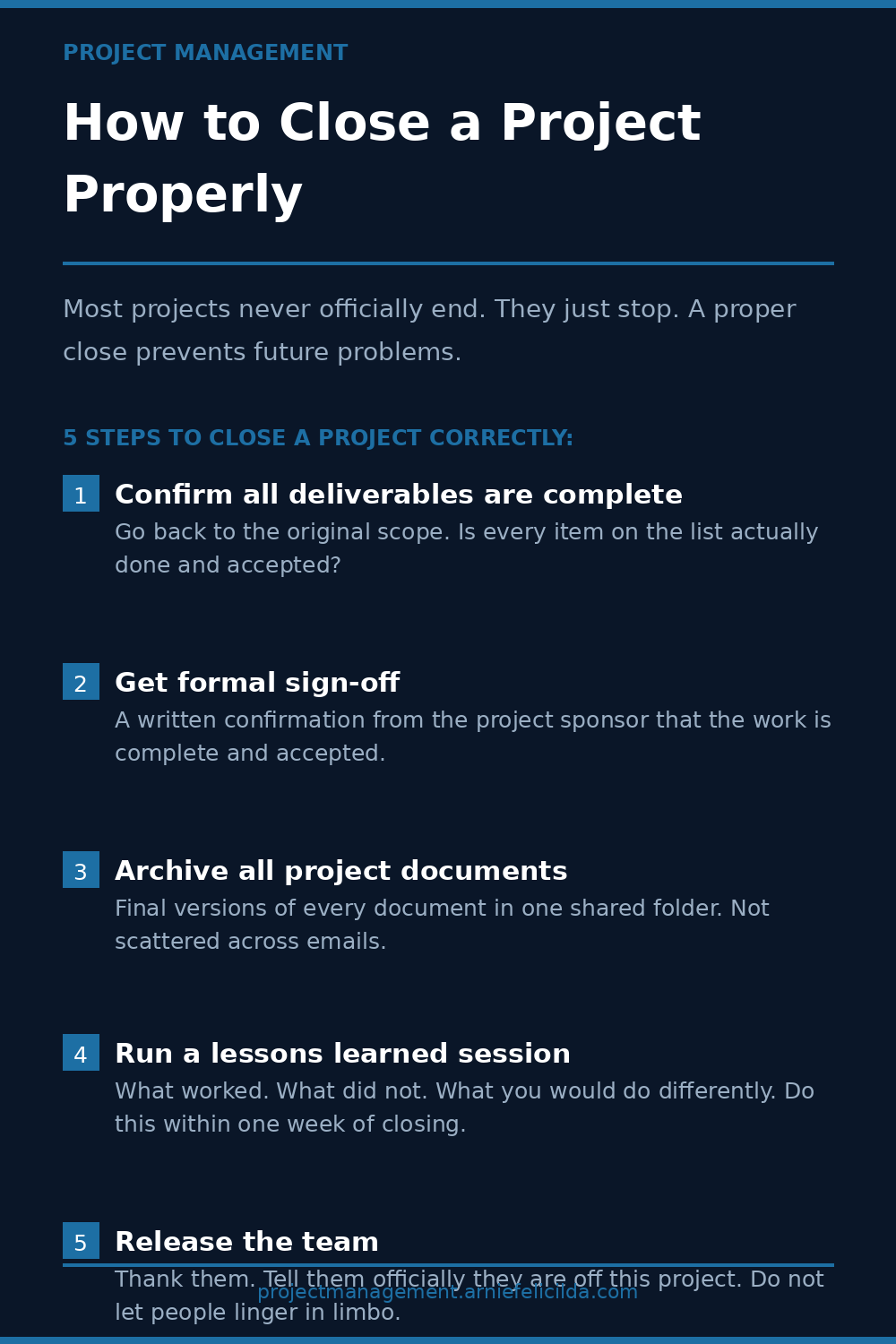
5 Steps to Close a Project Correctly
Confirm All Deliverables Are Complete and Accepted
Go back to the original scope document. Check every deliverable against what was agreed. Not what was built - what was agreed. Then confirm with the stakeholder or client that each deliverable is accepted, not just delivered. There is a difference between I sent it and they received and approved it.
Get Formal Sign-Off in Writing
A written confirmation from the project sponsor or client that the work is complete and accepted. This does not need to be a lengthy document. An email that says we confirm project X is complete and all deliverables have been accepted is sufficient. Without it, the project has no official end date and no clear acceptance.
Archive All Project Documents
Collect the final versions of every project document - the plan, the scope, the decisions log, the status reports, the contracts - into one shared folder. Not the working files. The finals. Archive them somewhere the organization can find them in two years if needed.
Run a Lessons Learned Session
Within one week of project close, hold a 60-minute session with the core team. What worked well and should be repeated. What did not work and should be changed. What surprised the team that could have been anticipated. This session turns a single project's experience into organizational knowledge.
Release the Team Formally
Tell each team member explicitly that they are released from this project. Thank them specifically for what they contributed. Update any resource allocation systems that still show them on this project. People who are not formally released from projects continue to feel responsible for them - and sometimes to spend time on them - indefinitely.
The Minimum Viable Close
If time is short, the minimum is written acceptance from the client or sponsor, one archived folder with the final documents, and one email to the team releasing them and thanking them. That takes 30 minutes and covers the most important outcomes of a full close process.
For more on this topic, read How to Run a Lessons Learned Meeting. You may also find What Is a Project Milestone and How to Set One useful as a next step.
Available Now
The Accidental Project Manager
For the person who was handed a project and told to figure it out. The 15-minute daily system, scope lock framework, and AI prompts that get any project back on track. No certification required.
Get the Book on Gumroad