Most status reports are too long because they are written to demonstrate effort rather than communicate status. The person writing it adds context, explains decisions, and describes activities in detail. The person reading it spends five minutes getting to the two sentences they actually needed.
Who the Status Report Is Really For
The status report is not for you. You already know what happened. It is for the stakeholders, the sponsor, and anyone else who needs to make a decision about this project without being involved in its day-to-day execution.
Write your status report for someone who has not looked at the project in a week and needs to understand its health in under two minutes. If it takes longer than that to read, it is too long.
The 5-Section Format
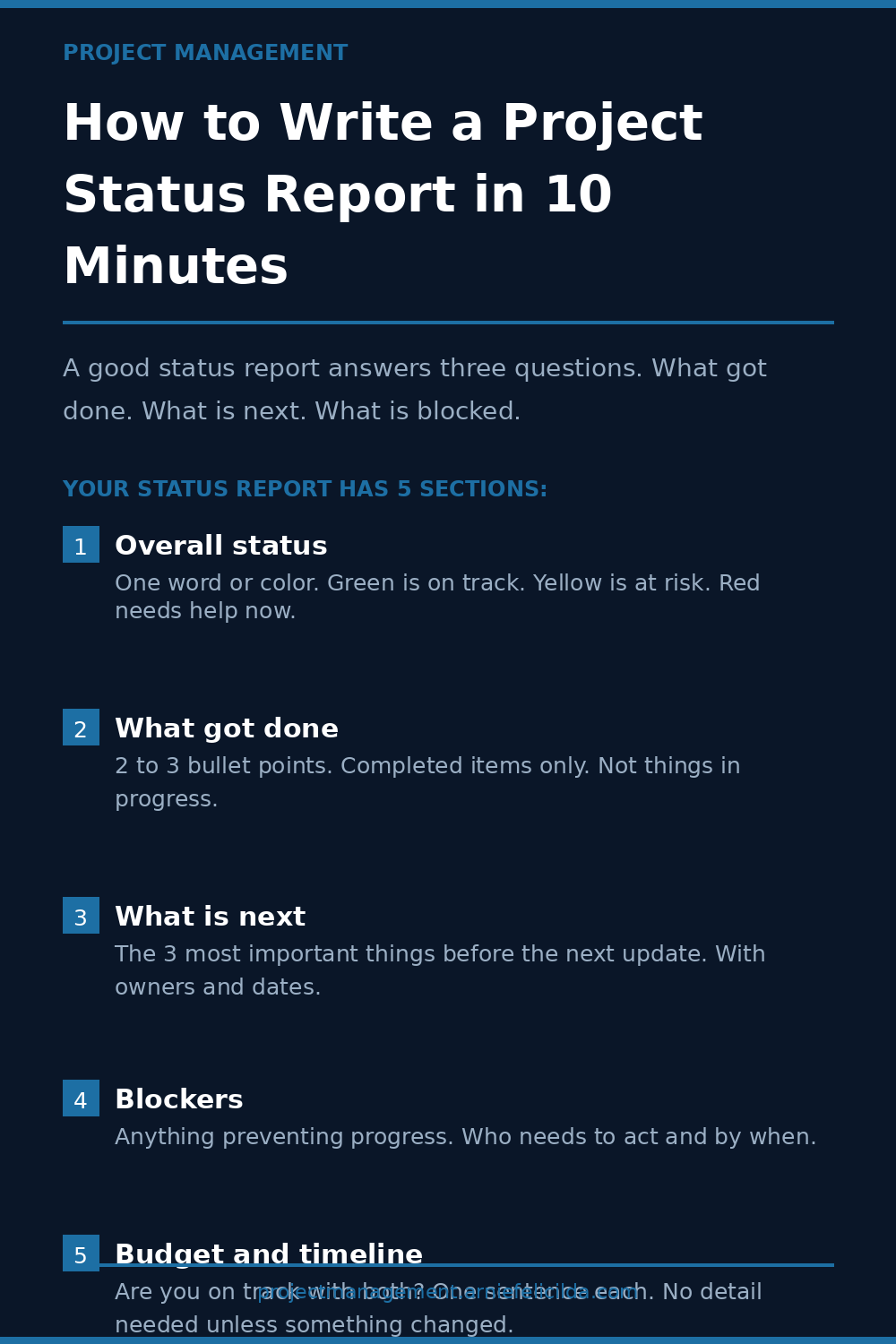
Overall Status
One word or color. Green means on track - timeline and budget are as planned. Yellow means at risk - something has changed that may affect delivery if not addressed. Red means this project needs intervention now - a decision or resource that is beyond the project manager's authority to resolve alone.
What Got Done
Two to three bullet points. Completed items only. Not things you started, things you finished. If you wrote the first draft of the requirements document, that is in progress. If it was reviewed and approved, that is done.
What Is Next
The three most important things happening before the next status update. Each one has an owner and a due date. This section tells the reader where attention should be focused right now.
Blockers
Anything preventing progress that you cannot resolve yourself. Be specific. This decision needs to be made by the steering committee by Friday or the implementation timeline moves by one week. Vague blockers do not get resolved. Specific ones do.
Budget and Timeline
One sentence each. We are on track to deliver by the original date or the current forecast is two weeks beyond the original date due to the vendor delay in week three. Numbers if available. No detail unless something has changed from the last report.
How Often to Send Status Reports
Weekly for most projects. Bi-weekly for slow-moving or low-risk projects. Daily for projects in a critical phase or in active recovery. The frequency should match the pace at which decisions need to be made. More frequent than that is overhead. Less frequent than that is silence.
For more on this topic, read What Is a Project Milestone and How to Set One. You may also find How to Manage Multiple Projects at the Same Time useful as a next step.
Available Now
The Accidental Project Manager
For the person who was handed a project and told to figure it out. The 15-minute daily system, scope lock framework, and AI prompts that get any project back on track. No certification required.
Get the Book on Gumroad