When multiple projects are running simultaneously, problems compound. A delay on one creates pressure on another. A stakeholder who needs attention on project A is competing with a deliverable due on project B. A team member shared across two projects becomes a scheduling puzzle.
The Core Problem With Multiple Projects
The core problem is context switching. Every time attention moves from one project to another, there is a transition cost - time spent reorienting, remembering where things stood, and rebuilding the mental model of the current state. The more projects, the more transitions, and the more of each day is consumed by transitions rather than progress.
Three projects managed with clear time blocks and a weekly review will outperform five projects managed reactively with constant context switching. Fewer projects, more focused attention, better results.
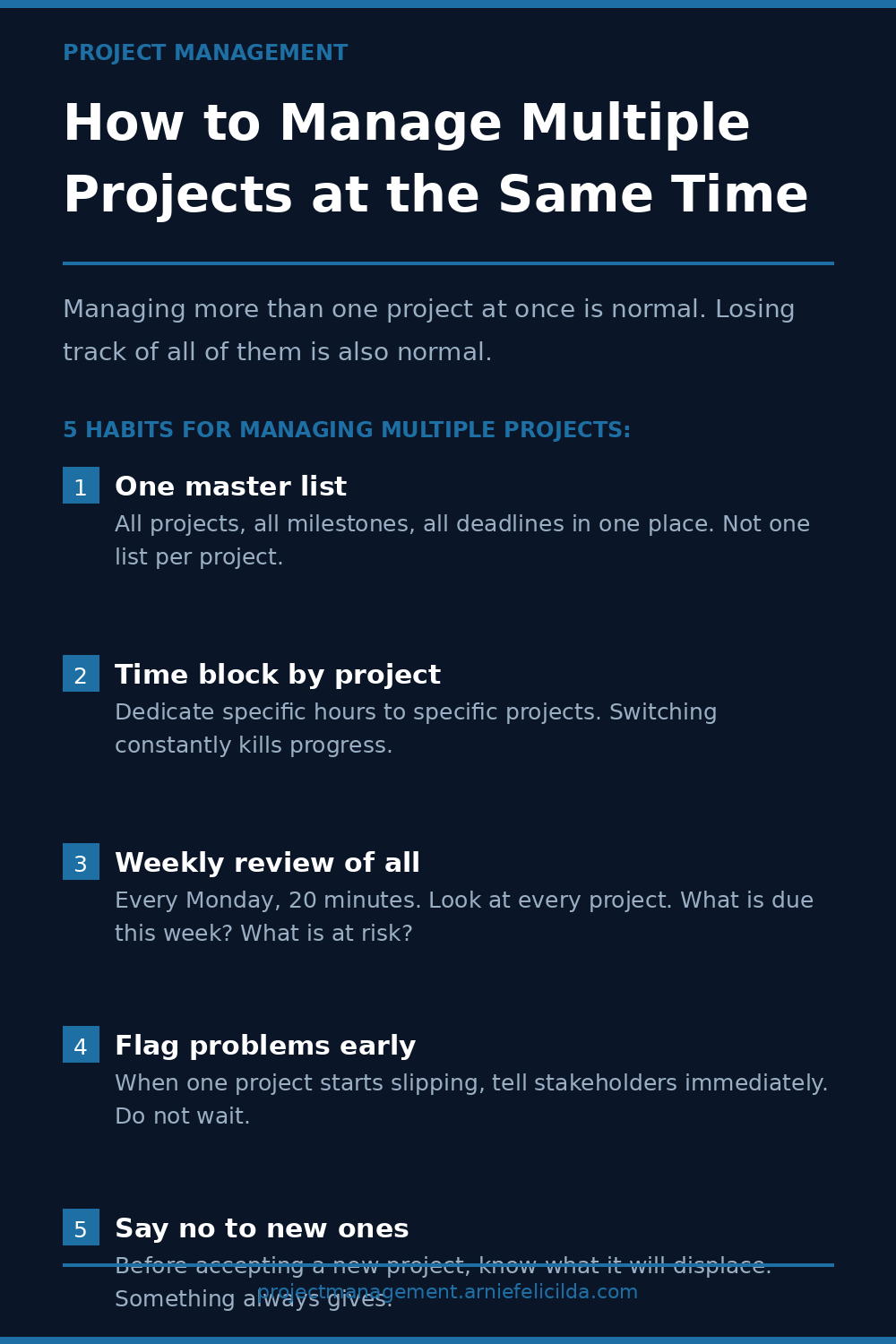
5 Habits for Managing Multiple Projects
One Master List of All Projects
Every project, every milestone, every key deadline in one place. Not one list per project. One list that covers all of them. This gives you a single place to look when prioritizing your week and a single place to check when a stakeholder asks about status.
Time Block by Project
Allocate specific hours to specific projects each week. Project A on Monday mornings. Project B on Tuesday afternoons. Project C on Thursdays. When you are in a project block, you work on that project and only that project. The transitions happen at the block boundary, not continuously throughout the day.
Weekly Review of All Projects
Every Monday, spend 20 minutes reviewing the state of every project. What is due this week. What is at risk. What needs a decision. What needs stakeholder communication. This review prevents the situation where a project quietly falls behind because attention was on other things.
Flag Problems Early on Every Project
When one project starts showing signs of slipping, communicate with the relevant stakeholders immediately - before it affects a milestone. A stakeholder who hears about a risk in week three has options. One who hears about a missed milestone in week eight does not.
Push Back on New Projects Before Accepting Them
Before accepting a new project, understand what it will displace. What will receive less attention if this project is added? What will slip? Make that trade-off explicit and get it acknowledged. Adding a project without acknowledging the displacement is not efficient. It is optimistic. And it usually results in everything being done poorly.
The Right Number of Projects to Manage at Once
Most people can manage two to three active projects simultaneously without significant quality degradation. Above four, quality typically starts declining across all of them. If you are managing more than four active projects, the conversation to have is not about better systems. It is about reducing the number of active projects.
For more on this topic, read How to Write a Project Status Report in 10 Minutes. You may also find How to Say No to a Stakeholder useful as a next step.
Available Now
The Accidental Project Manager
For the person who was handed a project and told to figure it out. The 15-minute daily system, scope lock framework, and AI prompts that get any project back on track. No certification required.
Get the Book on Gumroad