The instinct when managing remotely is to add more check-ins. More meetings, more status calls, more touchpoints. That instinct produces the opposite of what is needed. It adds overhead without producing visibility, and it signals to the team that they are not trusted to work independently.
What Remote Teams Actually Need
Remote teams need structure, not surveillance. The difference is that structure gives everyone a predictable system for sharing information and making decisions. Surveillance requires people to perform busyness rather than produce results.
A remote team that knows exactly what each member is working on, what is blocked, and what is due next is a well-managed team. A remote team that has daily video calls but no shared task visibility is not.
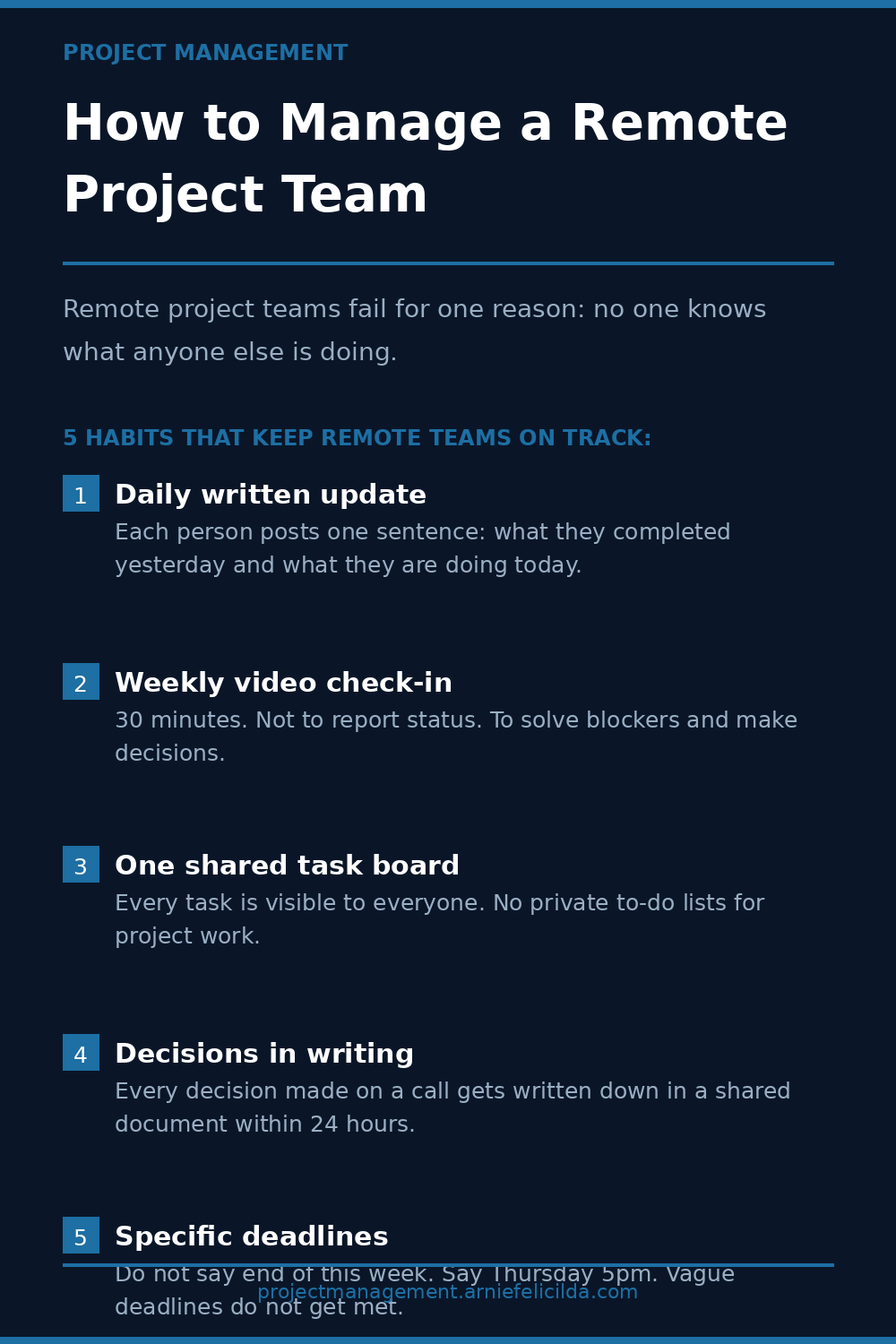
5 Habits That Keep Remote Teams on Track
Daily Written Update
Each team member posts one update per day in a shared channel. Two items: what they completed yesterday and what they are working on today. No more than three sentences. This takes two minutes to write and gives the whole team real-time visibility without a meeting.
Weekly Video Check-In
30 minutes, once a week. Not to report status - that happens in the daily written update. This meeting exists to solve blockers, make decisions, and maintain the human connection that written communication cannot fully replace. Stick to 30 minutes.
One Shared Task Board
Every project task is visible to everyone on the team in one place. Trello, Notion, Google Sheets - the tool does not matter. What matters is that there is one list that is the single source of truth. Private to-do lists for project work are not allowed.
Decisions in Writing Within 24 Hours
Every decision made on a video call gets written down in a shared document within 24 hours. Who made the decision, what was decided, and why. Remote teams that do not document decisions spend significant time relitigating them months later.
Specific Deadlines, Not Approximate Timelines
Do not say end of this week or sometime Thursday. Say Thursday at 5pm your time. Vague deadlines are interpreted differently by different people and almost never met with the urgency the deadline-setter intended.
The One Thing Most Remote Managers Skip
Most remote managers invest heavily in communication tools and very little in explicit team agreements about how those tools are used. The tools do not manage themselves. A shared agreement - which tool for what, how fast to respond, what counts as urgent - removes the ambiguity that creates friction in every remote team that does not have one.
For more on this topic, read How to Write a Project Status Report in 10 Minutes. You may also find How to Handle a Team Member Who Is Not Delivering useful as a next step.
Available Now
The Accidental Project Manager
For the person who was handed a project and told to figure it out. The 15-minute daily system, scope lock framework, and AI prompts that get any project back on track. No certification required.
Get the Book on Gumroad