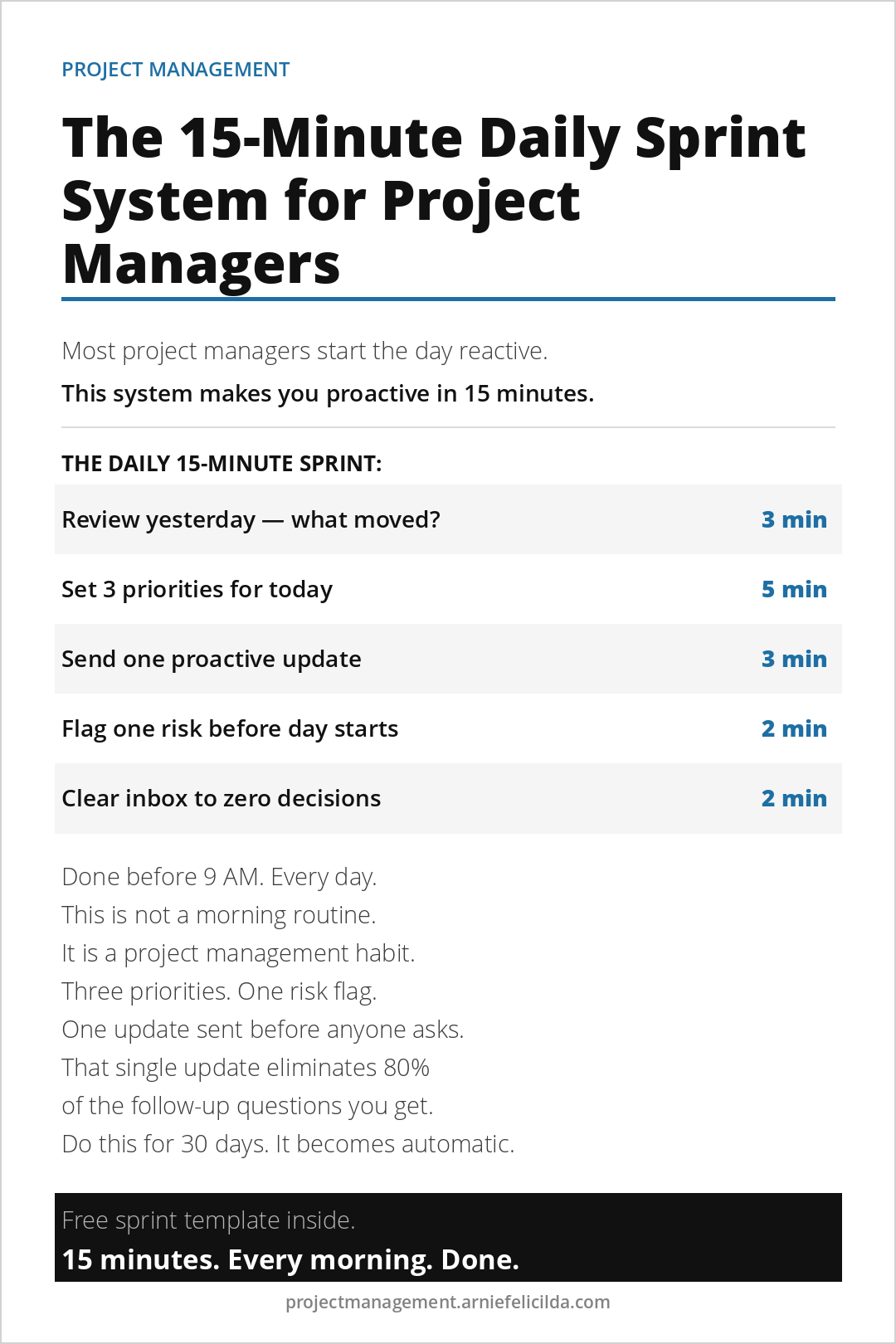
Most project managers start the day in reaction mode. The inbox has three urgent requests. A stakeholder is asking for a status they should already have. A team member is blocked and waiting on a decision. By 10 AM the project manager has already spent two hours responding to things that could have been prevented with 15 minutes of structured planning at the start of the day.
The 15-minute daily sprint system is a structured morning routine for project managers. It takes exactly 15 minutes. It happens before any meetings, before the inbox, and before any reactive work. Done consistently, it converts a project manager from reactive to proactive within two weeks. You can run it today using the free 15-Minute Daily Sprint tool on this site. Subscribe to access it immediately.
Why 15 Minutes Works
The system is not 15 minutes because project management can be compressed into a quarter hour. It is 15 minutes because most project managers can protect a 15-minute block at the start of every day, and because the five actions in the system produce the highest return on time of anything a project manager does during the workday. Longer planning sessions happen weekly. The daily sprint is not a planning session. It is an execution check.
The 5-Part Daily Sprint
Part 1. Review Yesterday (3 Minutes)
Look at your task list from yesterday. Which of the three priorities were completed? Which were not? For anything that was not completed, decide one of three things: carry it forward to today as a priority, delegate it, or remove it because it is no longer relevant. Do not carry incomplete tasks forward automatically. Every carryover needs a conscious decision.
Part 2. Set Three Priorities for Today (5 Minutes)
Write down the three most important tasks for today. Not ten. Not five. Three. The discipline of limiting to three forces the prioritization decision that most project managers avoid. The three priorities should connect directly to the current project milestones. Check your Weekly Progress Dashboard to see which milestones are at risk so you can prioritize the work that protects them first.
Part 3. Send One Proactive Update (3 Minutes)
Send one short update to one key stakeholder before any meetings begin. The update covers three things: what moved forward yesterday, what is being worked on today, and whether there are any decisions or approvals needed. This single update eliminates the majority of status check-ins that project managers receive throughout the day. Rotate through your key stakeholders so each one receives a direct update at least twice per week.
Part 4. Flag One Risk (2 Minutes)
Scan your risk log and identify the one risk that has changed most significantly since yesterday. Has a probability gone up? Has a mitigation plan stalled? Flag it. If it needs action today, add it to your three priorities. If it needs awareness only, note it for the next status meeting. Read more about setting up your risk log in What Is Project Risk and How to Manage It.
Part 5. Clear to Zero Decisions (2 Minutes)
Scan your inbox for anything that requires a decision from you or a decision from someone else that you need to trigger. Flag those emails. Respond to the ones that require a 30-second answer. Add the ones that require more thought to your three priorities if they are genuinely urgent. Leave everything else for after the sprint is complete.
The rule that makes the sprint work: The sprint happens before the inbox is fully processed. Not after. Most reactive mornings start because the inbox is opened first and the day is shaped by what is in it. The sprint shapes the day before the inbox has a chance to.
How Long Before This Becomes Automatic
Most project managers who start this system see a noticeable reduction in reactive interruptions within five to seven working days. When stakeholders receive proactive updates consistently, they stop asking for them. The follow-up emails and status requests that consume most of a project manager's reactive time disappear because the need for them has been preempted.
Within three weeks, the sprint becomes automatic. That shift in operating mode from reactive responder to proactive communicator is the single most impactful change most project managers can make in how they deliver projects. Use the free AI Prompt Library to draft your daily proactive updates in under 60 seconds so the sprint never takes longer than 15 minutes even on your busiest mornings.
If you want the complete system in one place including the scope lock framework, stakeholder management, and project recovery, The Accidental Project Manager covers all of it. It was written for people who were handed a project and had to build their system while running it.
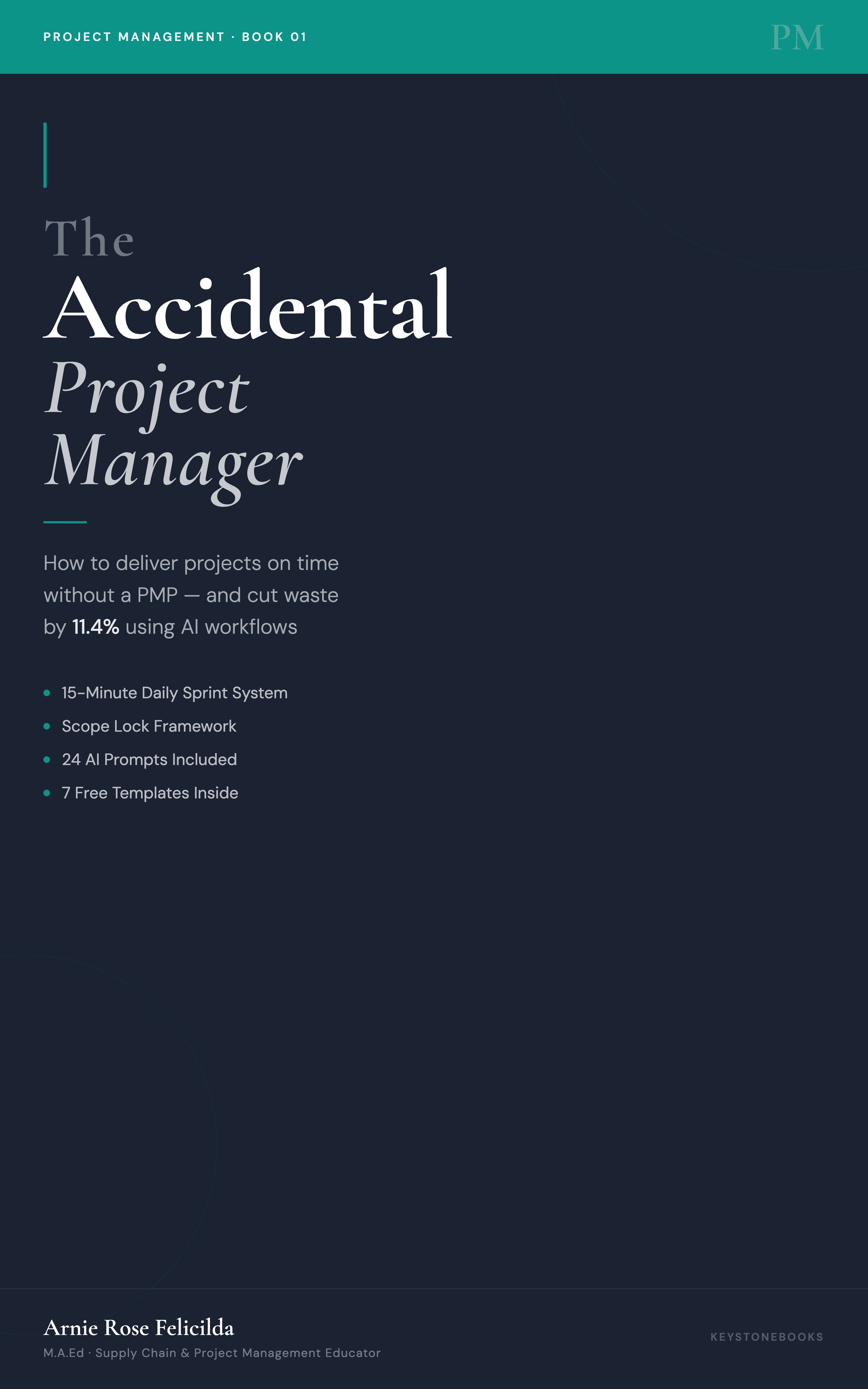
Book 01. Available Now
The Accidental Project Manager
How to deliver projects on time without a PMP and cut waste by 11.4% using AI workflows. 15-Minute Daily Sprint System, Scope Lock Framework, and 24 AI Prompts included.
Get the BookMore Project Management Reads
- How to Stop Scope Creep Before It Derails Your Project
- How to Manage Projects Without a PMP
- How Operations Managers Can Actually Use AI on Projects
- The Difference Between a Busy Project and a Healthy One
- How to Recover a Project That Is Off the Rails
Free Project Management Tools
Get free tools built for people who run projects without formal training.
Charter template, sprint system, dashboard, recovery checklist, and AI prompt library. All free. Delivered instantly.